
Guide to Choosing Your Garage Door Color
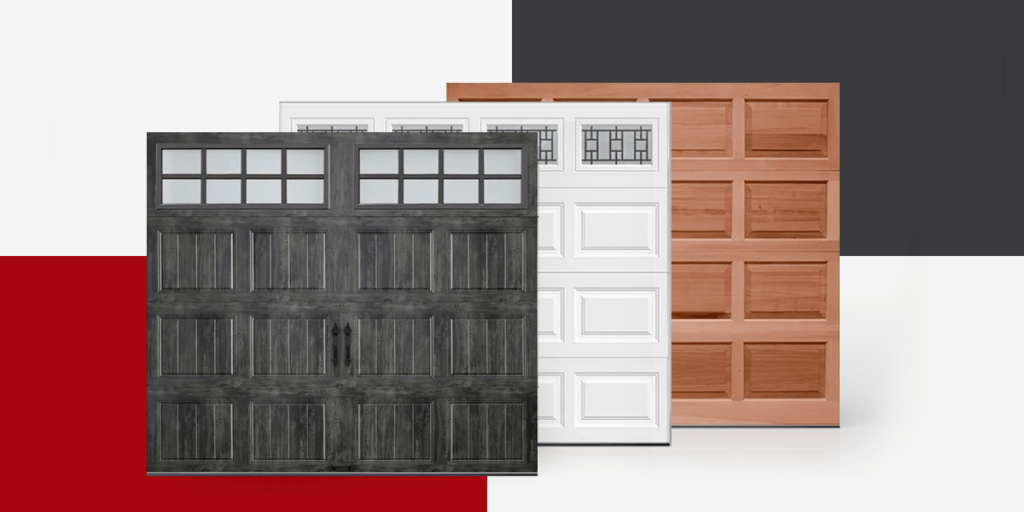
Choosing any color for your garage door may be tempting, especially when you have an array of options. That said, it’s best to consider how different colors can impact your home’s curb appeal, as the wrong selection can affect your house’s appearance in a negative way. With some careful consideration, you can select the best color for your garage door — one that works seamlessly alongside the rest of your house and property.
How Do You Choose a Garage Door Color?
When it comes to choosing the right color, it’s important to understand the outcome you’re trying to achieve. While some homeowners like to attract attention to their homes with bold garage door color choices, others prefer to have their garages’ appearance blend in with their properties. For example, you might prefer to highlight other features of your house by selecting a more subtle color choice for your garage.
Finding balance is important as you consider suitable colors — consider your home’s other exterior colors. These colors often include:
- The field color: This is the main color used on your home’s siding.
- The trim color: This is often the color used on window and door frames.
- The accent color: Areas like your front door and window shutters may be presented in a different color.
When pairing your garage door color with your home’s other exterior colors, visualize how everything would look by contrasting light and dark. For example, matching a dark field color with a light accent color will look different compared to a light field color with dark trim. This way, you can create a more cohesive curb appeal design.
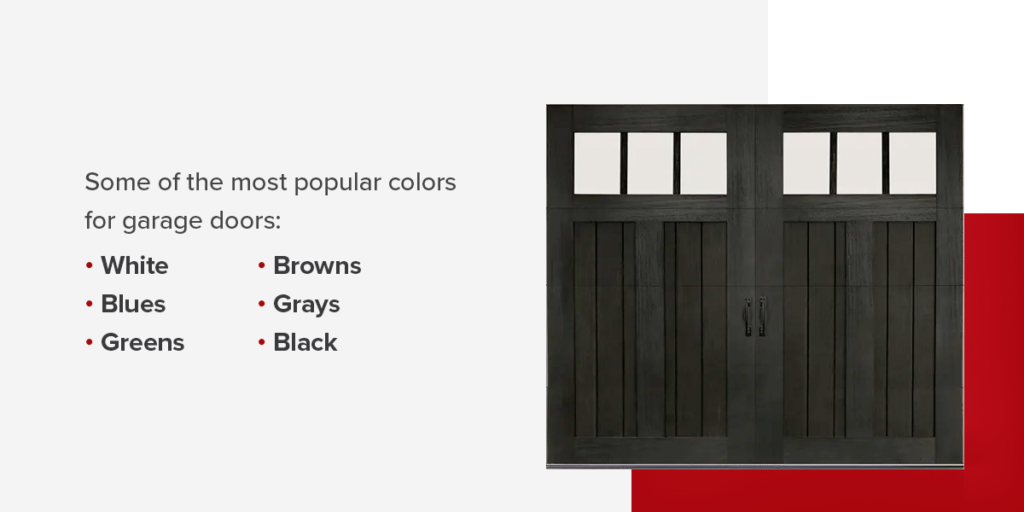
With all of that in mind, here are some of the most popular colors for garage doors for you to consider:
- White
- Blues
- Greens
- Browns
- Grays
- Black
Most Popular Garage Door Color Schemes
It’s beneficial to understand the theory behind colors by revisiting the color wheel and thinking about a few basic color schemes. This approach will help you put color matches into context and avoid mixing random colors because they look appealing.
The color wheel can become complicated, but we’ll keep to the fundamentals and highlight the important aspects. Here’s a breakdown of a few color schemes you may want to incorporate to align your home and garage door’s appearance.
- Primary colors: These are the dominant colors on the color wheel that can be mixed to create secondary colors — red, yellow and blue.
- Analogous colors: Located in close proximity on the color wheel, analogous colors sit alongside each other. These are colors that are similar in depth and hue and would normally blend in well when used together, although some shades can overpower the other colors and should be used subtly. Examples are violet or blue-violet or green and yellow-green.
- Monochromatic colors: A single color portrayed in different shades and hues is monochromatic. For example, you could opt for avocado green trim with an emerald accent color, while the field color is a different shade of green altogether. Although it might seem like too much of the same color, using a monochromatic approach can create an appealing visual flow when used strategically.
- Complementary colors: These colors are situated opposite each other on the color wheel, creating a stark contrast when paired. Examples are purple and yellow. While bold and daring, they can enhance coherence in the right setting.
- Neutral colors: These are base colors like white, gray, black and brown, and softer shades of brown like tan, creme and beige that are made using two complementary colors.
- Warm colors: These are earthy colors that are often associated with seasons like fall, including shades of orange, yellow and red.
Coordinating Your Garage Door Color With Your House Color
Certain colors and shades will match your house’s color better than others. Below, we cover a few popular home siding options and how you can coordinate your garage door color with them for a coherent exterior design.
Brick
A brick home already features natural reds, browns or yellows, which you can use in your favor. Inspect the primary colors in your home’s brick siding, such as red or yellow. Match your garage door using a similar color. For example, a dark chocolate brown may highlight the brick, while a contrasting but complementary brick and garage door combination like red and forest green might stand out more.
Gray or White
These neutral colors offer many potential matches because of their simple yet versatile nature. Still, you may want to avoid similar light colors for your garage door, like gray and tan. These colors can leave your house looking dull. Instead, opt for similar colors that have considerable shade contrasts. For example, if your siding is a gray color, opt for a much darker gray tone for your garage door color.
Beige or Tan
Similar to gray and white, you have many options with neutral colors like beige and tan. Try to steer clear of similar-toned colors. For example, you could choose a dark brown or a wood-stained garage door instead to create a more notable contrast.
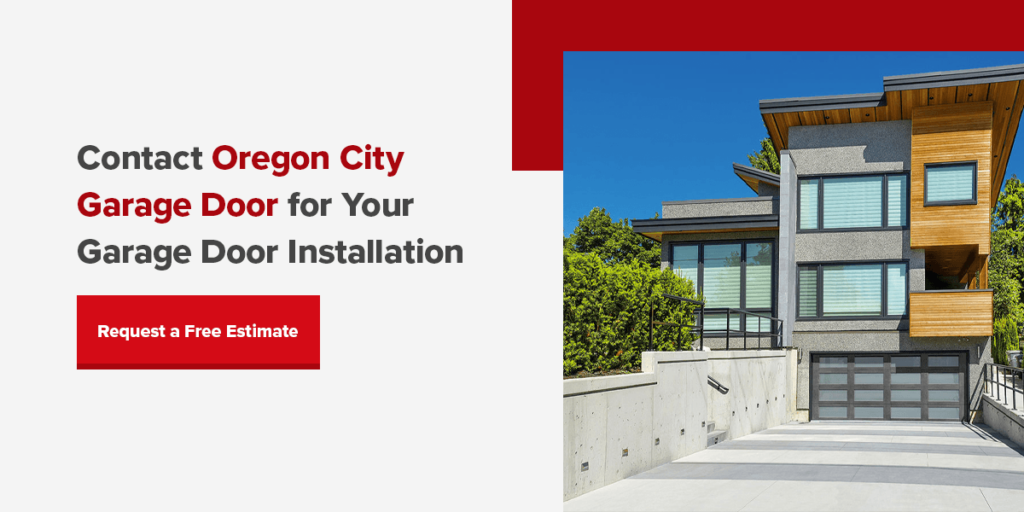
Contact Oregon City Garage Door for Your Garage Door Installation
If you need help deciding on the right color for your new garage door, let us help. Oregon City Garage Door offers various garage door types from many industry-leading brands. Browse our selection to find a garage door in a color that suits your vision.
Oregon City Garage Door offers numerous garage door services throughout the Portland area. Whether you need a new garage door, want to replace your garage door opener or require a different kind of garage door service, our team of garage door experts can assist you. Since 1992, we’ve worked with homeowners and business owners to install and repair garage doors, offering quality, comprehensive service you can count on.
If you’re interested in replacing your garage door or need to service your garage door, look no further. Call us at (503) 632-3070 for a free estimate or complete our service request form, and our team will respond promptly.
Guide to Garage Door Technology
With smart home technology increasing by leaps and bounds, it’s no surprise that even garage doors have brought a progressive approach to an otherwise underappreciated home feature. Now, it’s possible to modify almost anything mechanical or motorized for smart technology and its many uses. Our smartphones open worlds of possibilities with thousands of apps designed to make our lives easier.
Operating your garage door is as easy as pressing a button on your phone. With more functionality options, you no longer need a remote to open and close your door. This guide will explore how Wi-Fi garage door openers work and discuss other innovations, including the Amazon Key In-Garage Delivery option.
With our arsenal of knowledge, let Oregon City Garage Door install the latest garage door openers and accessories for improved security and convenience.
Wi-Fi Garage Door Opener Technology
While you may not necessarily want to replace your garage door remote with your smartphone, the ability to perform the same and additional functions on another device is convenient. If you misplace your remote, your phone will offer the solution. Some features of Wi-Fi garage door openers include the following.
- Mobile app syncing: Many newer garage door opener models use the internet, specifically Wi-Fi, to perform tasks remotely via a downloaded app on a smartphone. The app allows you to monitor activity in and around your garage even if you are not at home. You can also open and close your garage door from a distance if you need to let anyone in.
- Voice commands: The app allows you to activate features like voice control, where you can prompt virtual assistants like Siri or Alexa to operate the garage door on your behalf.
- Push notifications: Receive push notifications each time there’s door activity so you stay on top of things. The app will let you know whether it’s opening, closing or left open too long.
- Programming: Program your door to adhere to a fixed schedule every day or based on activity. For example, program your door to automatically open at the estimated time you arrive from work or secure it at a specific time each night. Or, schedule it to close by default after it’s stayed open for a given period. You can program more advanced models to switch light sensors on and off at regular intervals throughout the night.
Additional Garage Door Opener Smart Technology
Each of our Liftmaster garage door openers works with the myQ smartphone app and provides different functions. Notably, they let you view real-time updates and control your garage door entirely remotely from anywhere with an internet connection. Wi-Fi openers are growing in popularity as the need for improved security measures remains. Other garage door opener smart technology is also available on the market.
- Bluetooth: This technology requires you to be physically close to your garage door to operate it. It is less effective than Wi-Fi, since the connection is not as stable and tends to be intermittent, but it works well if done correctly.
- Geofencing: Our phones are ideal trackers. Some may be able to pick up your proximity due to your location settings and signal the garage door to open when you approach. Geofencing is an excellent addition to garage door openers using smart technology.
- Rolling codes: Your garage door opener sends a new code to your phone every time it opens and closes. Since the codes constantly change, intruders or hackers cannot duplicate them and use your Wi-Fi network to infiltrate your system.
- Live monitoring: Some garage door smart technology systems come with motion-detecting cameras you can place inside and outside your garage. You’ll have total surveillance of your garage surroundings, which you can link to your smartphone and watch remotely.
Amazon Key In-Garage Delivery
Amazon introduced its Key In-Garage Delivery option for Prime members in November 2017, and it’s been a massive success since. This feature allows members to order items online and have a delivery driver drop their parcel in their garage while they’re away. Here’s how Amazon Key In-Garage Delivery works:
- Link your garage to Amazon Key in the Amazon app, then turn on In-Garage Delivery.
- Sign in with your Amazon credentials.
- Select the “Let’s get started” prompt and “Set up a residence.”
- Link your Amazon and myQ accounts.
- Optionally, you can set up a camera with Cloud Cam or another service for further visibility.
- Browse through Amazon and select your items.
- Proceed to checkout and choose “Free Key Delivery.”
- You’ll receive a notification of the estimated delivery time.
- The driver will scan your package when they arrive.
- Once verified, the garage door will open automatically.
- The delivery person will place your parcel inside your garage.
- The delivery driver will wait until the door closes, concealing your parcel safely inside, before leaving.
If you don’t already have one, you may choose to install a camera for maximum security. Then, you can monitor your delivery driver from the moment they arrive until they leave. This feature is only available for Amazon deliveries, not items you receive through other services such as FedEx and UPS.
Benefits of Garage Door Technology
Garage door technology has come a long way in ensuring safety feature enhancement. There are many advantages to installing a garage door opener that is compatible with Wi-Fi and other technology.
- Increased security: Depending on the model, your garage door opener may have a security camera that lets you oversee your garage and home when you are at work or on vacation. The app generates and sends rolling codes to your phone with each door use for added security. You have complete control over access and who gains entry to your home, reducing the risk of break-ins. Most models also have LED lights that brighten the whole outside area, so you and your family are never vulnerable in the dark when you pull up to your home at night.
- Battery backup: Increase security further by ensuring you have a battery backup feature on your garage door. With this, you can still safely operate your garage door if you ever lose power. In addition, if your garage remote battery dies, you can use your phone to control your garage door.
- Safety sensors: A prominent feature of garage door technology packages is the inclusion of safety sensors. They detect any objects that obstruct the doorway by reversing the mechanism to avoid injuring anyone who could be in the way, especially children or animals.
- Utmost convenience: Enjoy remotely controlling your garage door by tapping a button. No need to stand within feet of your garage to command it to open and close and monitor activity any time, from anywhere.
- Seamless operation: Smartphone apps like myQ allow seamless operation with Wi-Fi connectivity. Your internet connection should ideally be strong to work optimally, but it is usually highly effective and reliable. Newer garage door opener models operate quietly, so you don’t have to worry about them disturbing your peace.
- Increased home value: Any security upgrades to your home are beneficial and add value if you ever decide to sell your home.
Let Oregon City Garage Doors Install Your Door Opener
While you may be willing to go to extremes to guarantee your family’s safety, we often underestimate the simplicity of upgrading existing devices to achieve the desired results. Oregon City Garage Door offers various garage door openers with smart technology to give you complete control of your garage and peace of mind knowing your family and belongings are secure.
If you’re ready to take the next step to protect your home, call us at 503-662-7665 or request an estimate so we can get the job done in no time.
Standard Garage Door Sizes
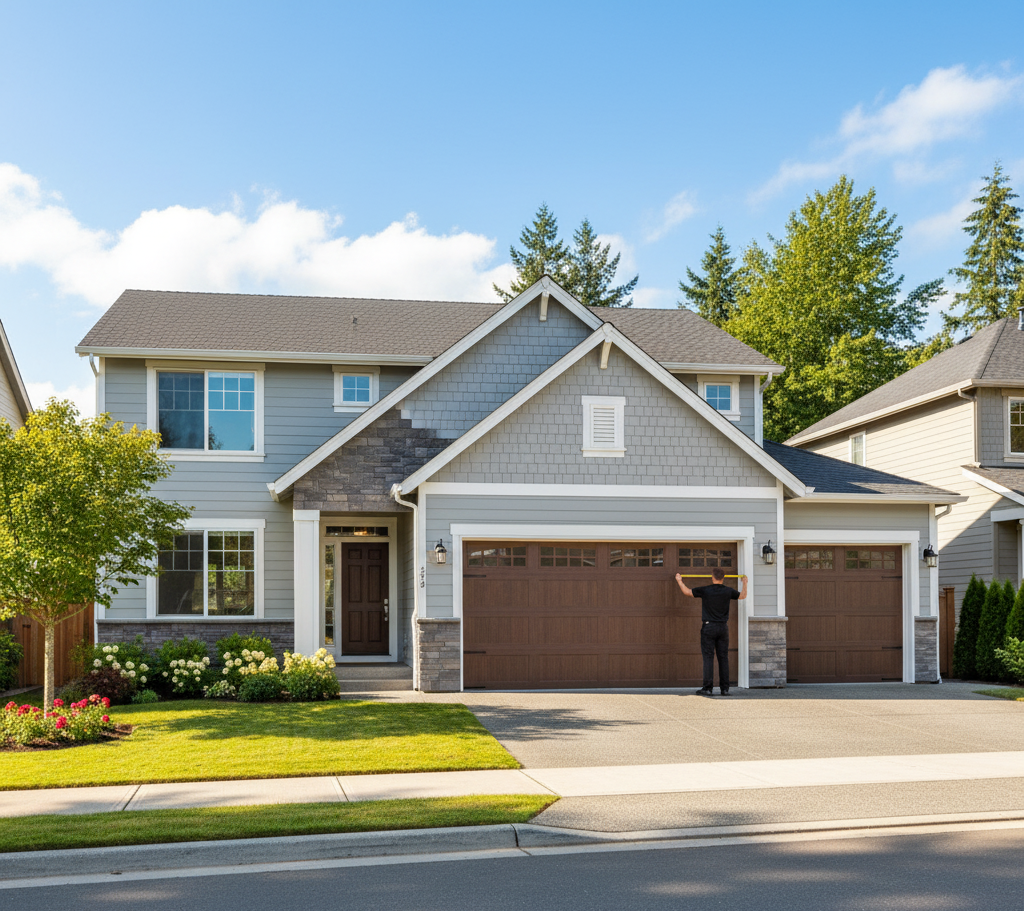
Whether you’re building a new home or it’s time to replace your existing garage door, getting the right measurements is the first critical step. While we offer a wide selection of doors from many quality vendors, we have a special partnership with Clopay® as our primary provider. We’ve found their superior product quality, outstanding support, and robust warranty make them the best choice for our customers, ensuring a beautiful and long-lasting investment.
At Oregon City Garage Door, our goal is to make your garage door installation a smooth and surprise-free experience. While our team is always ready to provide professional measurements, this guide will help you understand the standard garage door sizes available for your home.
A Guide to Standard Garage Door Dimensions
While custom doors are always an option, most garages are built to accommodate a few standard door sizes. When measuring, it’s crucial to consider more than just the door opening. You also need to account for:
- Headroom: The vertical space between the top of the door opening and the ceiling. This is needed for the door’s tracks, springs, and opener.
- Side Room (or Sideroom): The space on either side of the door opening, required for mounting the vertical tracks.
These clearance measurements are essential for a safe and functional installation. Now, let’s look at the most common door dimensions, which are typically presented as Width x Height.
Standard Single-Car Garage Door Sizes
A single garage door is designed for one vehicle but can vary in width to accommodate anything from a compact car to a large SUV or truck. The most common height for modern homes is 7 feet, but 8-foot-tall doors are also readily available for taller vehicles.
Common standard widths for single-car doors include:
- 8′ x 7′
- 9′ x 7′ (A very popular choice, offering more room)
- 10′ x 7′
- 8′ x 8′
- 9′ x 8′ (Ideal for SUVs and trucks)
- 10′ x 8′
Standard Double-Car Garage Door Sizes
A double garage door provides a wide, convenient opening for two vehicles. These are perfect for family households or for homeowners needing extra space for workshop equipment, storage, or recreational vehicles like ATVs and golf carts.
Common standard widths for double-car doors include:
- 16′ x 7′ (The most common double door size)
- 18′ x 7′
- 16′ x 8′ (Provides extra height for larger vehicles)
- 18′ x 8′
Configurations for Three-Car Garages
A three-car garage offers the ultimate flexibility for multiple vehicles and storage. Rather than one massive door, these garages typically use a combination of standard-sized doors for structural integrity and practicality.
The most common configurations are:
- One Double Door & One Single Door: For example, one 16-foot door next to one 9-foot door.
- Three Single Doors: Three separate 9-foot or 10-foot doors, separated by support posts.
Choosing the Best Garage Door Size for Your Home
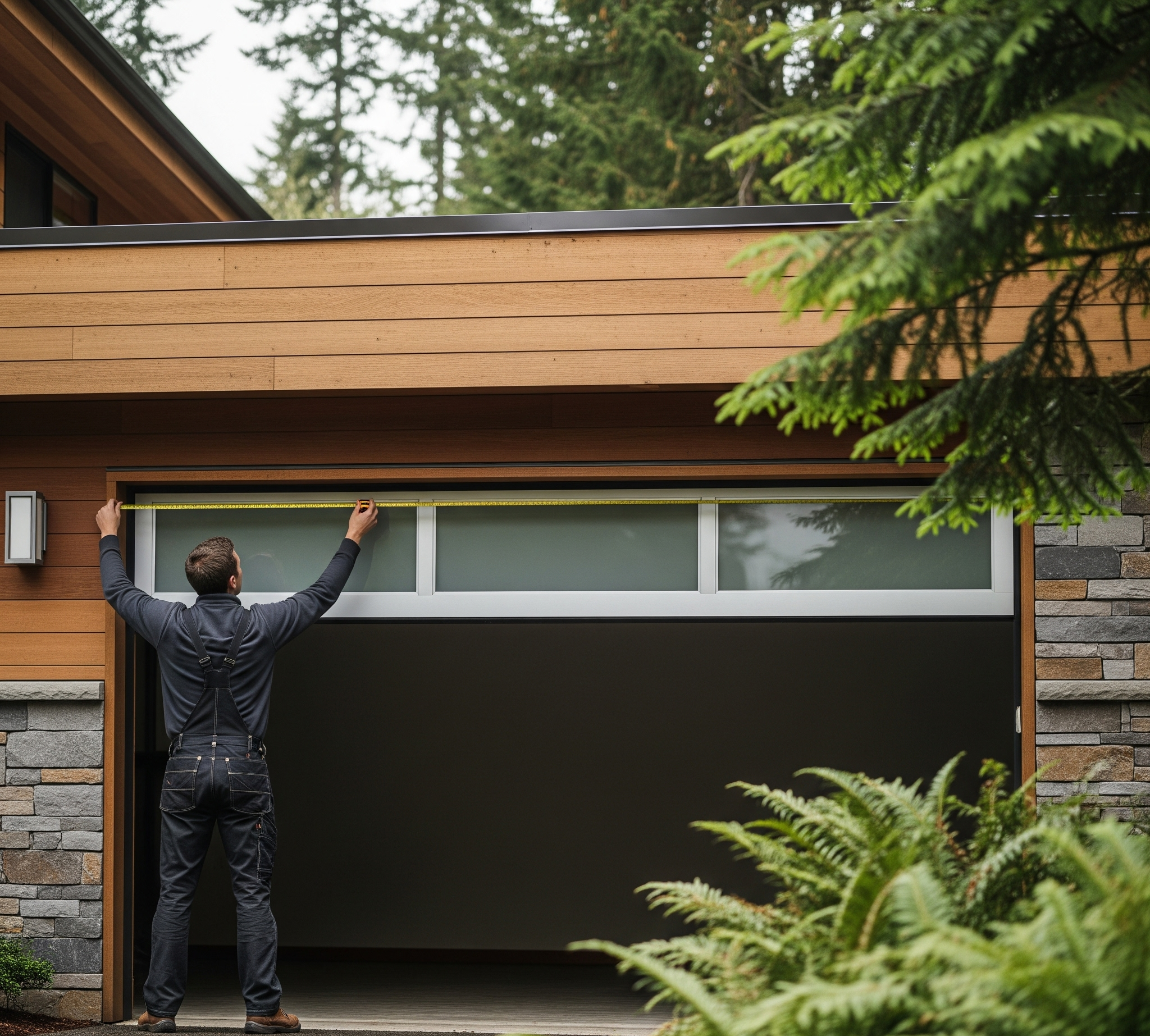
The right garage door size depends on your vehicles, your garage’s construction, and your lifestyle. If you’re replacing an existing door, the choice is often straightforward. However, for a new build or a major remodel, you have more flexibility.
A new garage door gives you incredible customization options. We particularly recommend our Clopay collections for their vast selection of styles, colors, insulation levels, and window designs. Planning for a slightly wider or taller door than you think you need can be a smart long-term investment, providing flexibility for future vehicles and making everyday use more convenient.
Custom Garage Door Sizes for RVs and Special Applications
Do you own an RV, a boat, or a lifted truck? Standard doors won’t cut it. For these applications, you’ll need a custom-sized door. RV garage doors often need to be 12 to 16 feet tall and can be 10 to 12 feet wide or more. Building a garage for a recreational vehicle usually requires a detached structure designed specifically for these larger dimensions. Our team can help you source and install a high-quality door built to your exact custom specifications.
Oregon City Garage Door: The Perfect Fit, Every Time
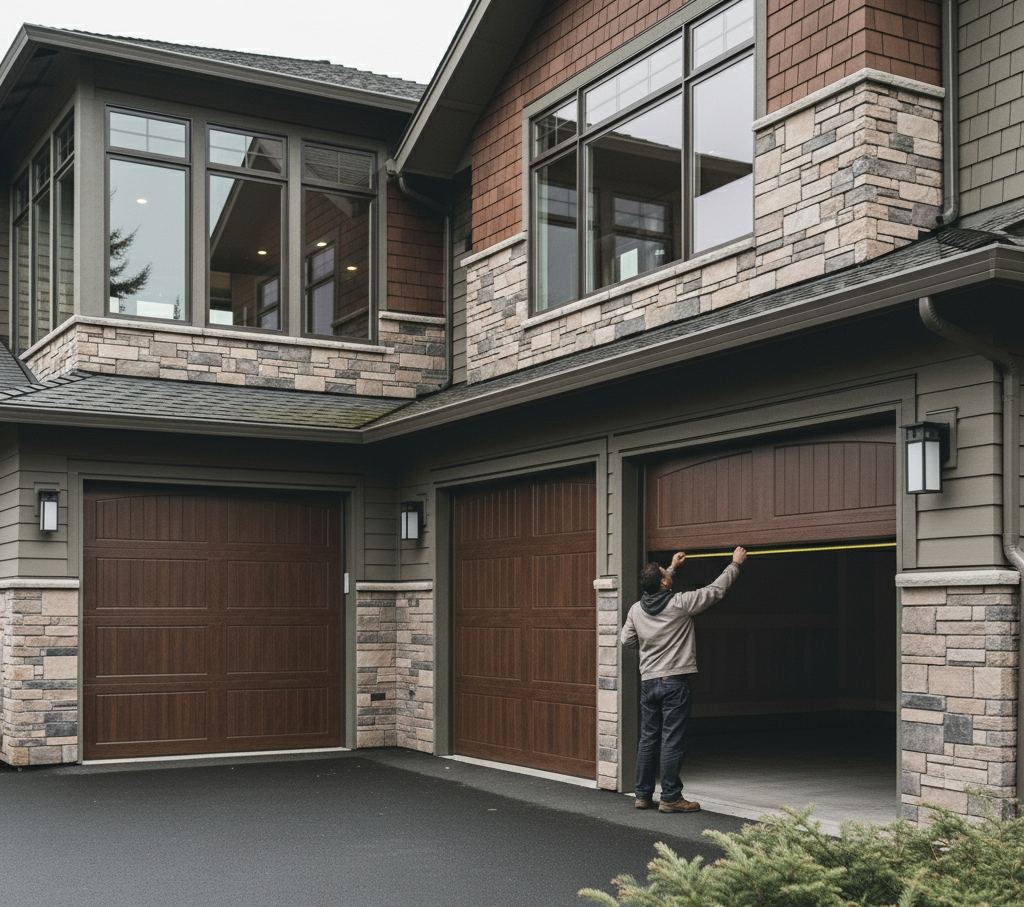
Don’t leave your new investment to guesswork. Let our experienced technicians take precise measurements to ensure your new door is a perfect fit. Want to see how a new Clopay door will look on your home? Try the powerful Clopay Door Imagination System to visualize different styles and colors.
Our friendly and efficient installation team is ready to help you choose and install the perfect door for your home. We’ll handle everything from measurement to final testing, giving you peace of mind that the job is done professionally.
Ready to get started? Call us at 503-632-3000 or request your free estimate online today!
How to Open a Garage Door Without Power
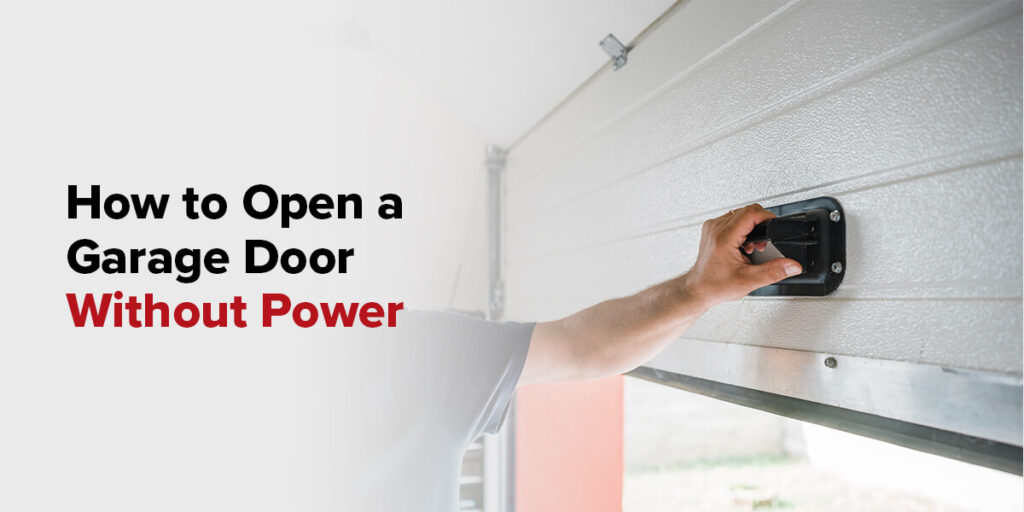
Many homeowners don’t realize their garage doors are affected by power outages until they can’t use them. Luckily, you don’t have to wait until the power comes back to use your garage door.
What Happens to Garage Door Openers During Power Outages?
Garage door openers allow users to control their garage doors automatically while securing them against manual force. During a power outage, electricity no longer flows to the door opener, preventing it from controlling door movement.
How to Manually Open and Close Your Garage Door Without Power
Your vehicle is of no use if you can’t get it out of the garage. The good news is there are various techniques for safely opening and closing your garage without power.
From the Inside
If you’re in your garage and need to get your car out, follow these steps:
- Unlock the door: Locate any locks or latches on the garage door and open them to ensure they don’t cause damage when manually lifting the door.
- Unplug the garage door opener: Unplug the garage door opener to prevent the assembly from sustaining damage if the motor engages when the door is off the tracks.
- Pull the emergency release cord: The emergency release cord is a red handle that hangs from the center of the garage door track. Pull the handle straight down to disconnect the door from the trolley.
- Lift the garage door: Now that the garage door is disengaged, you can open it manually by grabbing the bottom of the door and lifting it. Make sure the door stays in place above you before letting go.
- Close the door: Once you’ve driven your car out of the garage, pull the door down to close it.
From the Outside
If you come home to find your garage door shut during a power outage, you can open it from the outside in a few simple motions:
- Find the emergency release kit: Locate the small lock toward the top of your garage door, which contains an emergency release cable.
- Free the release cord: Use the special key to open the lock and pull out the tumbler to access the emergency release cord. Pull the cord to trigger the release mechanism.
- Unlock the garage door: Find the lock near the garage door handle and turn it vertically to unlock it.
- Lift the door: Push the door straight up and make sure it stays open before releasing it.
- Close the door: Enter the garage and pull the door closed.
Upgrade Your Garage Door at Oregon City Garage Door
For dependable residential garage door installations, choose Oregon City Garage Door. With over 25 years spent providing services across the Portland area, we’re the experts you can trust.
Request an estimate on our products today!
How to Fix Gaps on the Top, Side and Bottom of Your Garage Door
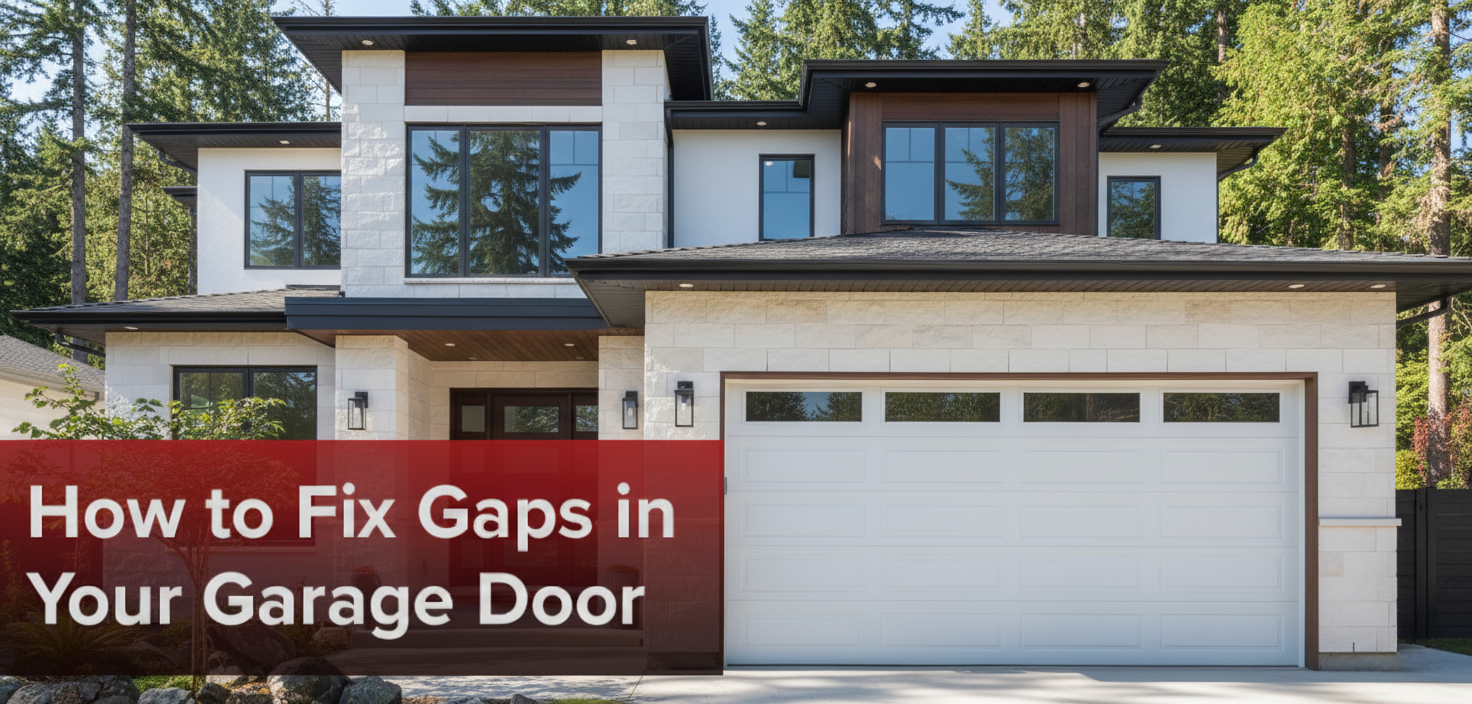
A small gap in your garage door might not seem like a big deal, but it can be an open invitation for rain, debris, and pests like mice and insects. In some cases, a noticeable gap could even be a security risk.
At Oregon City Garage Door, we want to help you keep your garage safe and sound. Here’s our guide to finding and fixing those pesky garage door gaps.
What is a Garage Door Gap?
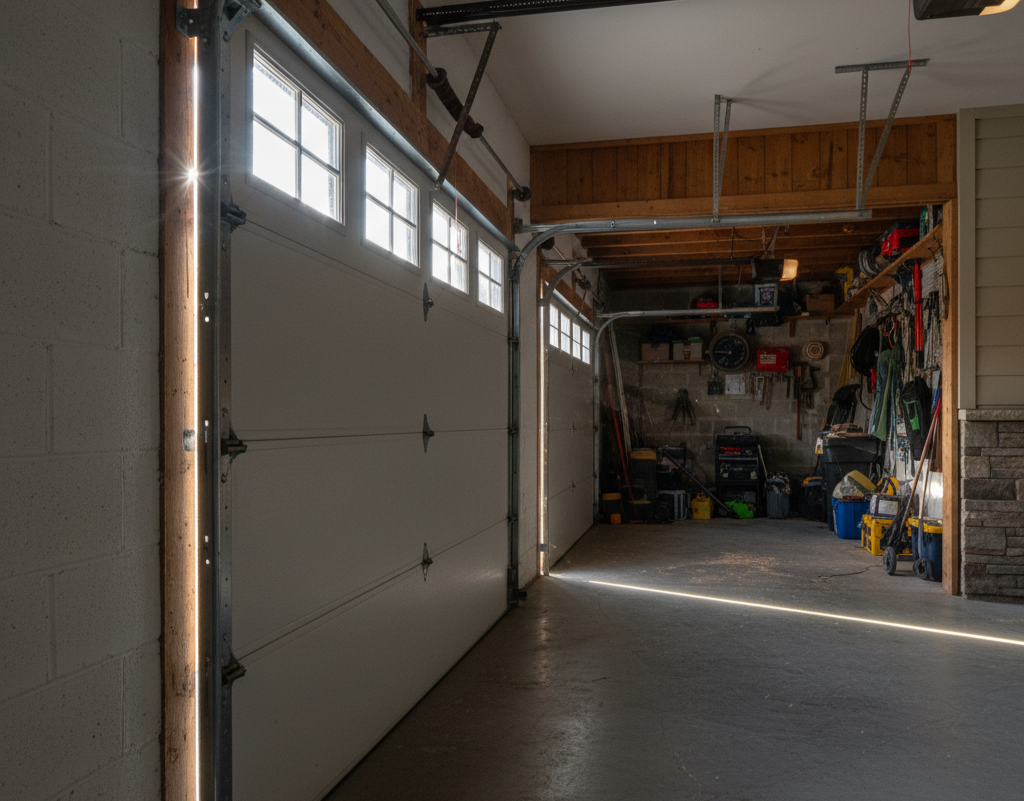
A garage door gap is any unwanted space along the sides, top, or bottom of your door when it’s closed. These gaps can let in drafts, raising your energy bills, and allow water to seep in, potentially damaging your garage’s foundation.
How to Find Garage Door Gaps
Some gaps are obvious, but smaller ones can be tricky to spot. Try these two simple methods:
- The Sunlight Test: Turn off the lights in your garage during the day. Look for any slivers of sunlight coming through around the edges of the door.
- The Hand Test: On a breezy day, run your hand along the inside perimeter of the garage door. You’ll be able to feel any drafts.
Common Causes of Garage Door Gaps
Before you can fix the problem, you need to know what’s causing it. Here are the most common culprits:
- Worn-Out Weatherstripping: The rubber or vinyl seal at the bottom of your garage door can wear down, crack, or get chewed on by pests over time.
- Misaligned Tracks: The metal tracks that guide your garage door can become bent or misaligned, causing the door to sit unevenly.
- Incorrect Limit Switch Settings: The limit switch on your garage door opener tells the door when to stop. If it’s not set correctly, the door might not be closing all the way.
- Shifting Foundation: Over time, the concrete floor of your garage can settle or shift, creating an uneven surface for the door to close on.
How to Seal Garage Door Gaps
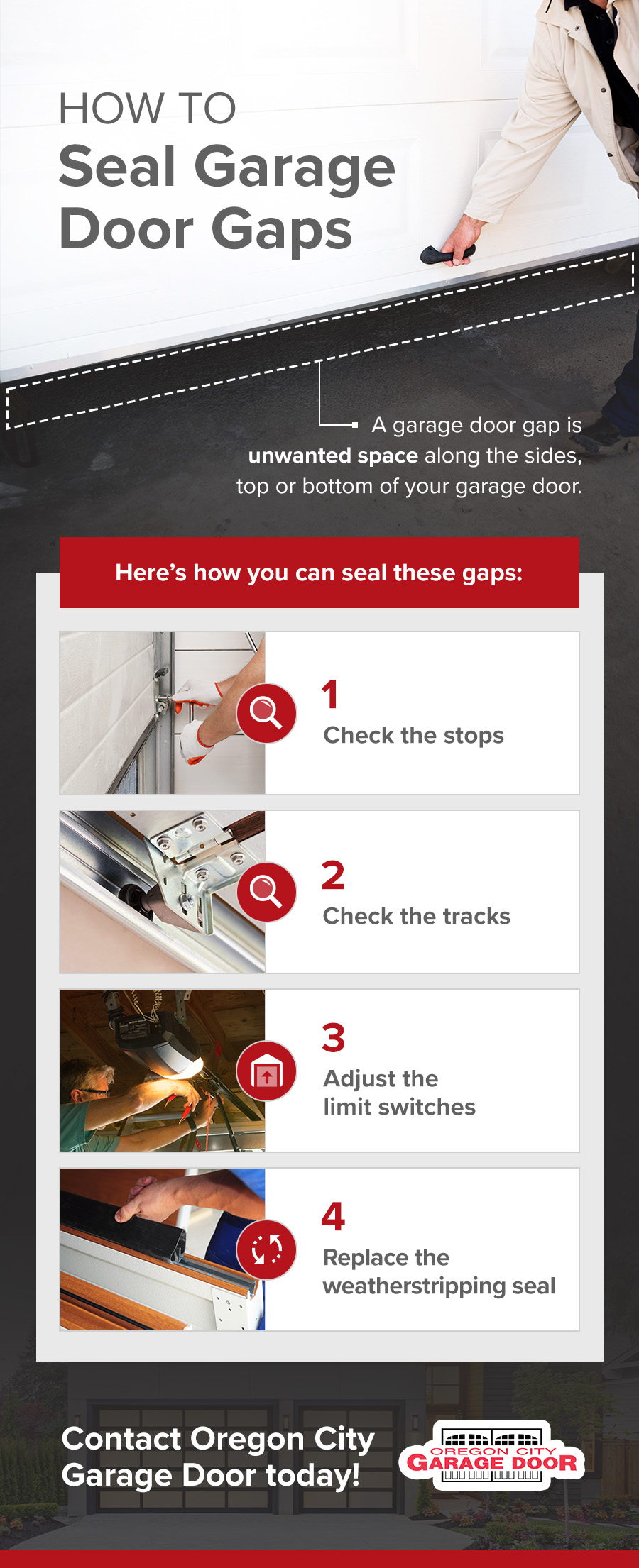
Here are four common ways to fix gaps in your garage door:
1. Replace the Weatherstripping Seal
This is one of the most common and effective fixes. You can buy a garage door weatherstripping kit at your local hardware store. Be sure to measure the width of your door to get the right size.
2. Check the Tracks
Look at the vertical tracks on either side of your door. Do they look straight and parallel? If they seem bent or out of alignment, we strongly recommend calling a professional for this repair. Adjusting garage door tracks can be dangerous without the proper tools and experience.
3. Adjust the Limit Switch
If your door stops just short of the floor, you may need to adjust the “down” limit switch on your garage door opener. Consult your owner’s manual for specific instructions for your model, as this can vary. A small adjustment can often make a big difference.
4. Install a Garage Door Threshold
A threshold is a rubber strip that you glue to the garage floor directly under the door. It creates a raised barrier that seals the gap and helps keep water out.
A Note on Safety
Your garage door is the largest moving object in your home. While some of these fixes are DIY-friendly, others can be dangerous if not done correctly. If you’re ever unsure or uncomfortable with a repair, please call a professional.
Still Have Gaps? Contact Oregon City Garage Doors Today!
If you’ve tried these solutions and still have a gap, or if you’d rather leave it to the experts, we’re here to help. Our experienced technicians can quickly diagnose the problem and provide a lasting solution to keep your garage secure and weatherproof.